CABINET APPROVES UGANDA’S HUMAN RIGHTS REPORT FOR UN REVIEW
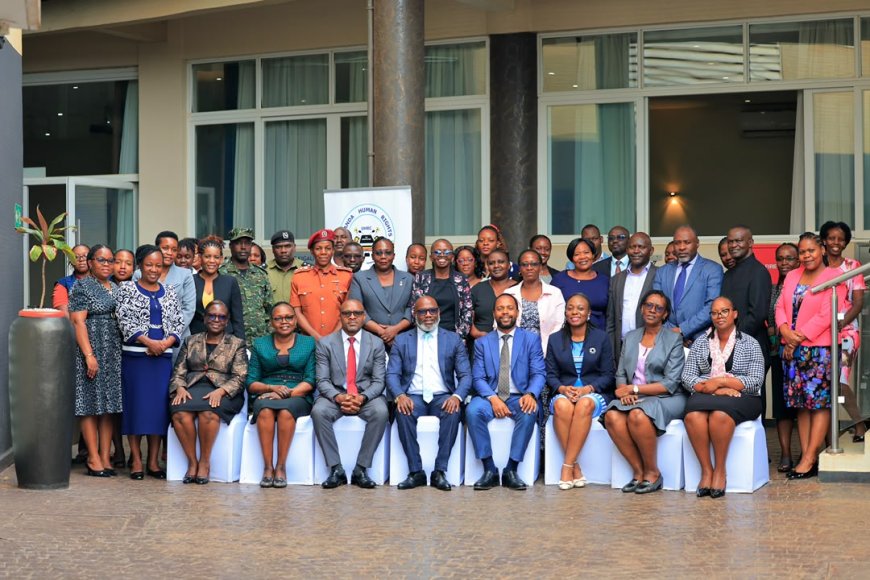
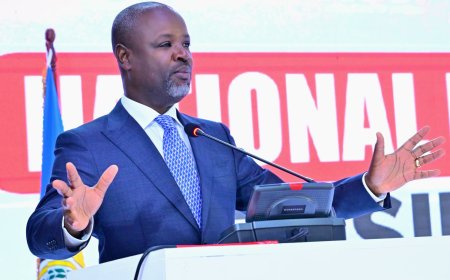
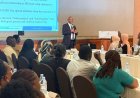
Cabinet has approved Uganda’s national report on progress and challenges in human rights ahead of its submission to the United Nations Human Rights Council for the fourth cycle of the Universal Periodic Review (UPR). Minister for ICT and National Guidance Justine Kasule Lumumba the report will be submitted to the UN body through the Ministry of Foreign Affairs. The Universal Periodic Review is a United Nations process through which member states assess one another’s human rights records and make recommendations on how to improve compliance with international human rights obligations. The process provides Uganda with an opportunity to present measures it has taken to promote and protect human rights, outline areas where progress has been made and identify challenges that remain unresolved. According to Lumumba, Uganda’s report covers efforts to strengthen national human rights institutions, improve access to justice and protect women and children. It also addresses refugee protection, social protection, education, healthcare, business and human rights, and the management of climate change-related issues. These areas touch on citizens’ access to justice and essential services, personal safety, protection from discrimination and the extent to which their rights are respected. However, the minister said approval of the report should not be interpreted as meaning that all human rights challenges had been resolved. Instead, the document presents the government’s account of the country’s record for examination through the international review process. “Our responsibility is to build on the progress made and address the gaps that remain,” Lumumba said. Uganda’s participation in the fourth review cycle will take place through established international channels, with the report serving as the basis for examining the country’s human rights performance and identifying areas for further action. The Universal Periodic Review applies to all UN member states and is conducted under the Human Rights Council. During the process, countries receive recommendations from other member states on measures they could take to strengthen human rights protections. The recommendations provide a framework for assessing progress and identifying reforms that may be needed before a country’s next review. Meanwhile Uganda Human Rights Commission through its Directorate of Monitoring and Inspections, has conducted an intensive capacity-building workshop on the Human Rights Based Approach (HRBA) to planning and service delivery for Senior Government Officials across various Ministries, Departments, and Agencies (MDAs). The training, equipped participants with practical skills to integrate fundamental human rights principles directly into national development planning and everyday public service delivery. Delivering the welcome remarks, Ms. Pauline Nansamba Mutumba, Director of Complaints, Investigations, and Legal Services, emphasized collaboration. She stated that a primary goal of the gathering was to co-develop an effective HRBA tool designed to evaluate and assess MDA performance nationwide. Opening the workshop on behalf of Acting Secretary Mr. Kamadi Byonabye, Ms. Rosemary Kemigisha, Caretaker Director of Research, Education, and Documentation, underscored the core philosophy of the framework: "The Human Rights-Based Approach places people at the center of development by empowering individuals and communities as rights holders to understand and claim their rights. At the same time, it strengthens the capacity and accountability of duty bearers, particularly the State and its institutions, to respect, protect, and fulfill those human rights." Chaired by Ms. Sarah Nakhumitsa, Director of Regional Services, the workshop features a series of specialized modules led by human rights experts: The high-level training brought together senior leadership from a cross-section of key accountability and service-delivery institutions namely ministry of Education and Sports; Foreign Affairs; Gender, Labour and Social Development; Justice and Constitutional Affairs; Health; Energy and Mineral Development; Lands, Housing and Urban Development; Internal Affairs meanwhile oversight & Governance bodies included Office of the Prime Minister (OPM), Parliament of Uganda, Office of the Attorney General, and the Inspectorate of Government. Strategic Authorities & Agencies comprised of National Planning Authority (NPA), Uganda Police Force (UPF), Uganda Registration Services Bureau (URSB), National Environment Management Authority (NEMA), Uganda Communications Commission (UCC), Uganda Law Reform Commission (ULRC), National Information Technology Authority – Uganda (NITA-U), and the Uganda Bureau of Statistics (UBOS).
 Felix Oketcho
0
1