"AM NOT AFFRAID OF WITCHCRAFT,AMIDST CORRUPTION FIGHT," BALAAM
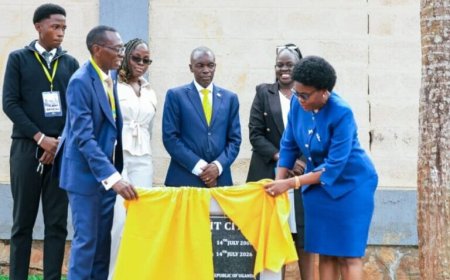
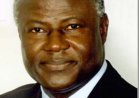
Newly appointed Ugandan Minister for Local Government, Hon. Barugahara Balaam Ateenyi, assumed office in June 2026 with a highly aggressive, anti-corruption, and reform-minded agenda. He has pledged to fight graft, decentralize field operations, rotate public workers, and overhaul grassroots administrative structures
 Felix Oketcho

Minister for Local Government Balaam Barugahara has said he will not be deterred by threats of witchcraft as he continues his crackdown on corruption in local government.
The minister, who has recently been conducting inspection tours and publicly calling out officials accused of corruption, said his actions are guided by his constitutional responsibilities and are aimed at promoting accountability in public service.
Balaam said he has no reason to be afraid because his faith in God gives him confidence.
He urged Ugandans not to live in fear of witchcraft, saying prayer is more powerful than any form of superstition.
“They are not God. If someone bewitches you, you pray to God. Those who think they can use witchcraft to stop me are wasting their time because I am doing my job and following the Constitution,” he said.
Balaam added that fear of witchcraft should never prevent leaders from serving the country or fighting corruption.
Newly appointed Ugandan Minister for Local Government, Hon. Barugahara Balaam Ateenyi, assumed office in June 2026 with a highly aggressive, anti-corruption, and reform-minded agenda. He has pledged to fight graft, decentralize field operations, rotate public workers, and overhaul grassroots administrative structures
Balaam has declared war on corrupt district officials. He has explicitly challenged corrupt officers to return stolen public funds or face public exposure and arrest. In a recent inspection, he even arrested five school administrators in Mbale District over staffing and stocking mismatchesMaps
To prevent district officials from becoming untouchable “small gods,” Balaam plans to rotate local government staff every three years across different districts.
He declared, “Local government is local, not on Kampala Road.” Ministry commissioners and himself will frequently be in the field to monitor service delivery rather than working from offices in the capital
Following guidance from CDF Gen. Muhoozi Kainerugaba, Balaam directed local councils across the country to rename streets after traditional rulers, cultural leaders, national heroes, and outstanding Ugandans by September 5, 2026.
His Impact Since Balaam Barugahara took over as the Minister of Local Government, he has launched aggressive, hands-on anti-corruption inspections and issued strict national directives
He has personally led on-site inspections in regions like Mbale, Jinja, and Bulambuli. These have resulted in the public arrests of local officials and school administrators over allegations of fake enrollment data, “ghost” workers, and shoddy construction projects.
Balaam directed all cities, towns, and municipalities to rename their streets after traditional rulers, cultural leaders, and national heroes by September 5, 2026.
He ordered all districts and cities to fully constitute their District and City Service Commissions by August 30, 2026, to fill over 800 vacant staff positions and fix service delivery delays.
While some citizens support his direct clean-up efforts, several local mayors have criticized his methods, arguing that a minister should focus on higher-level supervision rather than personally acting as an investigator.
Over the past five years, the Government of Uganda has allocated and transferred approximately Shs 4.4 trillion to parishes nationwide under the Parish Development Model (PDM).This money acts as a revolving fund. It gives low-interest loans to help people leave farming for money-making businessesMaps
The government has allocated Shs 4.4 trillion to the Parish Development Model (PDM) in the 2026/27 national budget. This funding supports the PDM across all 10,589 parishes nationwide. Each parish receives this money as a low-interest loan fund to help families escape poverty and join the money economy.