THE $25 BILLION VOID: INSIDE UGANDA’S RACE TO SHIELD ITS FINANCIAL SYSTEM FROM CLIMATE COLLAPSE
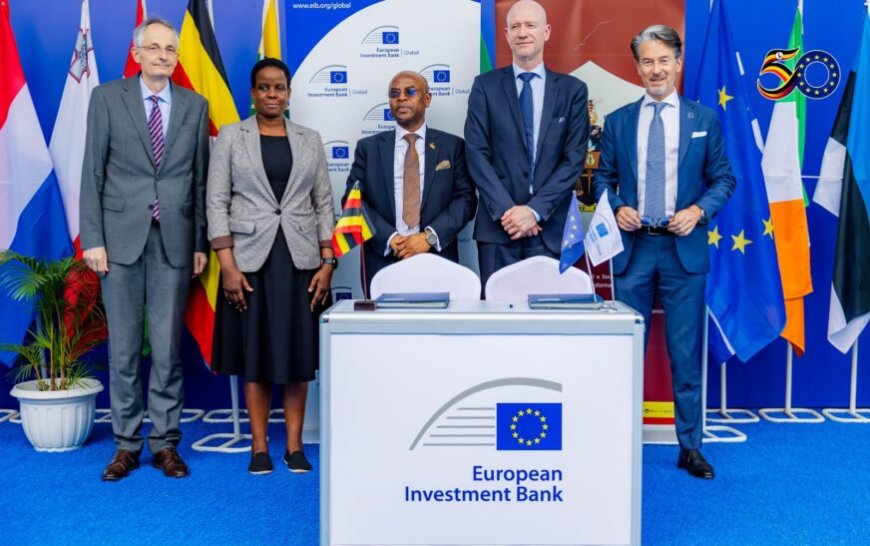
Uganda faces a staggering 90% capital shortfall in its race to meet 2030 climate commitments, securing less than 10% of the required $28.1 billion needed to combat environmental degradation. This massive funding void has exposed the nation's financial core, prompting an urgent intervention by the European Investment Bank (EIB) and the Bank of Uganda (BoU). Investigative look into the deal reveals a systemic scramble to patch severe regulatory vulnerabilities before extreme weather triggers widespread credit defaults and destabilizes the wider banking network. Bank of Uganda Deputy Governor Professor Augustus Nuwagaba warned that climate-related disruptions are no longer just environmental issues—they are direct threats to banking solvency. Financial institutions are deeply interconnected. A localized default caused by climate destruction can rapidly ripple through the entire economy. Droughts, floods, and volatile weather ruin production and transport infrastructure. This directly weakens borrowers' ability to service loans, leaving commercial banks holding toxic, unrecoverable assets. Moving forward, the BoU is demanding that commercial lenders integrate climate-risk assessments directly into their daily loan evaluation algorithms and risk models, rather than treating them as a superficial regulatory checklist. To mitigate these hidden liabilities, the EIB Group’s Greening Financial Systems initiative will provide targeted technical assistance instead of direct corporate loans. While the framework builds on Uganda's National Climate Finance Strategy 2025–2030, the core challenge shifts from policy drafting to enforcement. With only a fraction of necessary funds in hand, the central bank must now prove it can successfully convert European technical expertise into aggressive, climate-resilient financial regulation. Uganda’s commercial banking sector is quietly exposed to a severe systemic threat driven by an unprecedented 90% climate funding shortfall. With less than 10% of the required $28.1 billion secured to meet 2030 climate goals, the nation's financial institutions are highly vulnerable to macroeconomic shocks. While policymakers frame climate change as an environmental crisis, an investigative look into the European Investment Bank (EIB) and Bank of Uganda (BoU) intervention reveals that the central bank's primary concern is preventing a catastrophic wave of credit defaults from crippling commercial lenders. Extreme weather destroys production and transport assets; borrowers lose revenue. Financial institutions rely on shared interbank markets and liquidity pools. Lack of transparent climate-risk reporting deters international private investors. Bank of Uganda Deputy Governor Professor Augustus Nuwagaba issued a stark warning to the banking sector, noting that because Uganda's key economic drivers—such as agriculture, production, and transport—are entirely weather-dependent, climate shocks function as direct financial shocks. Severe droughts and sudden floods destroy cash flow for businesses and farmers overnight. When these borrowers can no longer service their debt, commercial balance sheets instantly accumulate toxic, unrecoverable assets. Nuwagaba warned that "the problem which hits one is a problem for all." Because commercial banks are deeply interconnected through lending and liquidity networks, distress at a single heavily exposed lender can rapidly metastasize across the entire financial system. The Enforcement Mandate: Overhauling Commercial Operations Faced with these hidden liabilities, the central bank is using the €30 million Greening Financial Systems programme to transition from advisory guidelines to strict regulatory enforcement. Lenders will no longer treat climate risk as a superficial corporate social responsibility (CSR) exercise. The BoU is ordering commercial banks to embed climate-risk algorithms directly into routine loan evaluations, credit allocations, and internal risk models. As the first commercial lender selected to undergo this technical overhaul, Housing Finance Bank will serve as the testing ground for how Ugandan banks must identify and mitigate climate liabilities before issuing credit. Lenders will be forced to publicly disclose their climate risk exposure under the newly operationalized National Green Taxonomy. This framework aims to expose weak balance sheets while reassuring international investors that Ugandan banks can accurately price environmental threats. With the National Climate Finance Strategy 2025–2030 underway, the race is no longer just about securing billions in green capital. For Uganda's commercial banks, it is an aggressive defensive maneuver to shield their balance sheets from inevitable environmental disruptions that threaten to destabilize the country's broader financial architecture.
 Felix Oketcho
0
2