EQUITY BANK LAUNCHES CLIMATE CHANGE FUND TO SUPPORT FARMERS
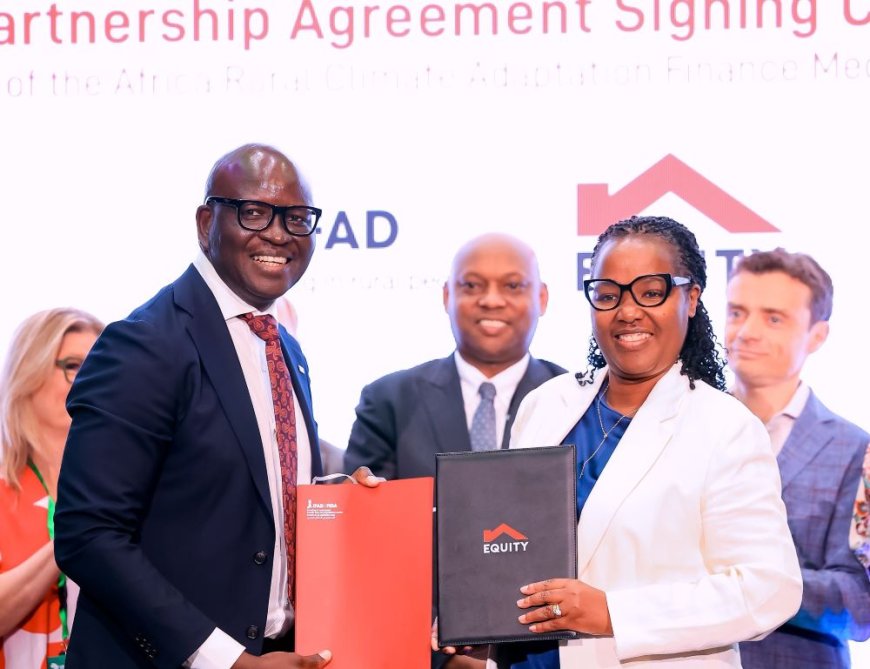
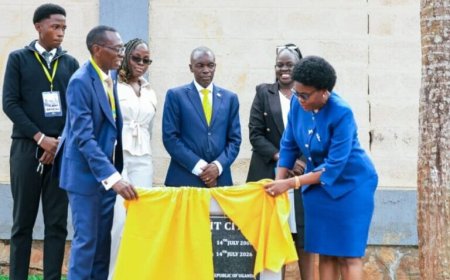
Ugandan smallholder farmers and rural businesses are among the intended beneficiaries of a new US$200 million (about Shs755 billion) financing mechanism, led by Equity Group and the UN’s rural development fund, to help East African producers invest in measures to withstand the effects of climate change. The Africa Rural Climate Adaptation Finance Mechanism (ARCAFIM) was launched on Friday by the International Fund for Agricultural Development (IFAD) and Equity Group at the Africa Food Systems Forum 2026 in Kigali, Rwanda. Ugandan government representatives attended alongside officials from the other participating countries. The 12-year mechanism will operate in Uganda, Kenya, Tanzania and Rwanda. According to the organisers, it targets about 260,000 smallholder farmers and 500 rural micro, small and medium-sized enterprises (MSMEs), at least half of them women and 30 percent youth. The organisers say ARCAFIM combines US$180 million in lending capital with about US$20 million in technical assistance. Because the lending capital is designed to revolve over roughly four investment cycles, they expect it to generate about US$266 million in loans over the life of the programme. Equity Group is the private-sector partner in the arrangement. Of the US$180 million lending base, US$90 million comes from the group’s own balance sheet, matching the concessional public contribution one for one. The organisers say credit risk is shared across the portfolio, with international financing partners covering first losses, a middle layer shared with the bank, and Equity carrying the senior risk — an arrangement they say leaves a commercial lender bearing risk alongside public capital rather than merely administering it. Equity Group will deliver the financing through its banking subsidiaries in the four countries, which in Uganda means Equity Bank Uganda, one of the group’s operations across seven African markets. The organisers say the money will reach farmers directly and through microfinance institutions, savings and credit cooperatives (SACCOs) and value-chain companies. ARCAFIM is co-financed by the Green Climate Fund, which has committed US$55 million; the Ministry for Foreign Affairs of Finland, which is providing US$30 million in returnable capital; the Nordic Development Fund; the Government of Denmark; and the European Union. Speaking at the launch, IFAD Vice President Dr Gérardine Mukeshimana said the success of climate adaptation finance would depend on turning global commitments into investments that reached rural communities. “ARCAFIM’s ambition is to make rural climate adaptation a recognisable, viable and sustainable business line for African financial institutions,” she said. “The mechanism is starting in East Africa, but it is designed to be adapted and replicated across Africa.” Dr James Mwangi, group managing director and chief executive of Equity Group Holdings, said the mechanism was intended to treat rural borrowers as commercially viable rather than as recipients of aid. “By committing our own balance sheet alongside concessional capital, we are not funding a project — we are building a market, one in which lending climate resilience becomes an ordinary banking business rather than an act of charity,” he said. The organisers say the financing will support investments such as irrigation and water harvesting, dairy and livestock resilience, post-harvest storage, renewable energy and climate-resilient agro-processing. The technical assistance is meant to build the capacity of the participating institutions to originate adaptation lending. Moses Nyabanda, managing director of Equity Bank Kenya, who signed the agreements for the bank alongside Dr Mukeshimana for IFAD, said the goal was to enable farmers and agricultural businesses to adapt, raise production and grow incomes. The signing ceremony was presided over by Hannington Namara, managing director of Equity Bank Rwanda. The organisers estimate the programme could strengthen food security for about 1.2 million people and benefit some 1.5 million in total, directly and indirectly, though they did not give a country-by-country breakdown. IFAD and Equity Group say they have identified Southern and West Africa as the next candidate regions once the model is proven.
 Felix Oketcho
0
7