UGANDA STRENGTHENS MIGRATION GOVERNANCE WITH NEW POLICY
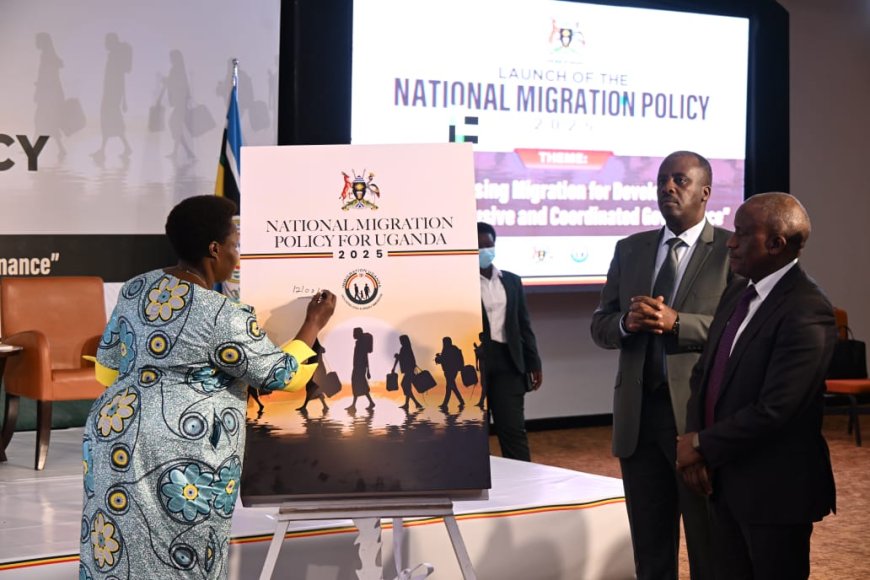
Jessica Alupo Vice President in her remarks said: “This is not merely the unveiling of another government document. It is the unveiling of a national vision—a declaration of Uganda’s commitment to manage migration in a manner that is orderly, secure, humane and beneficial to our people.”
 Felix Oketcho
By Our Reporter
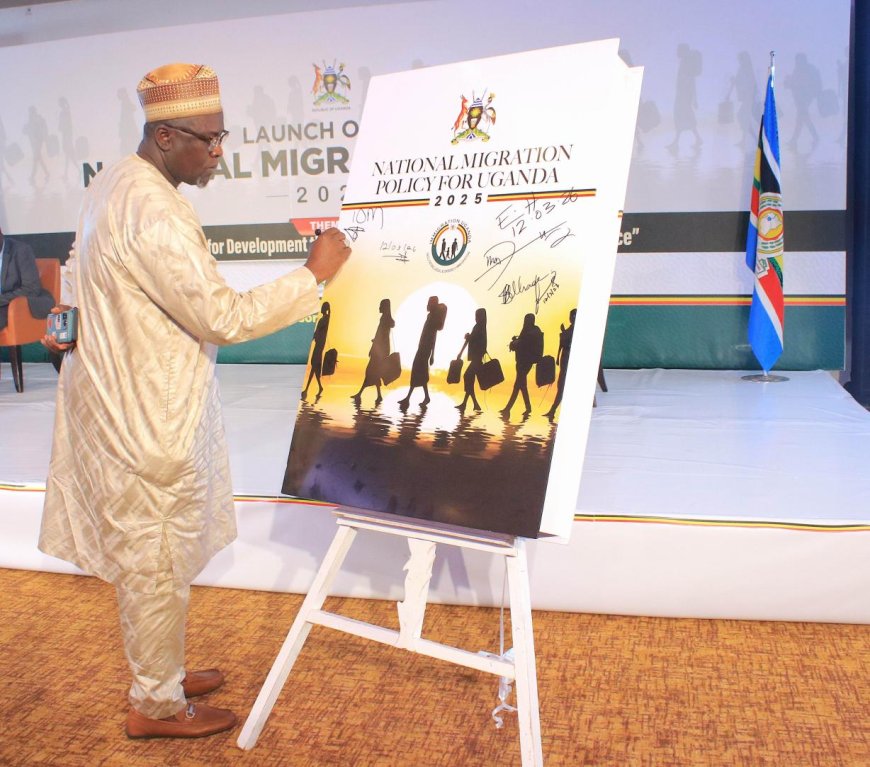
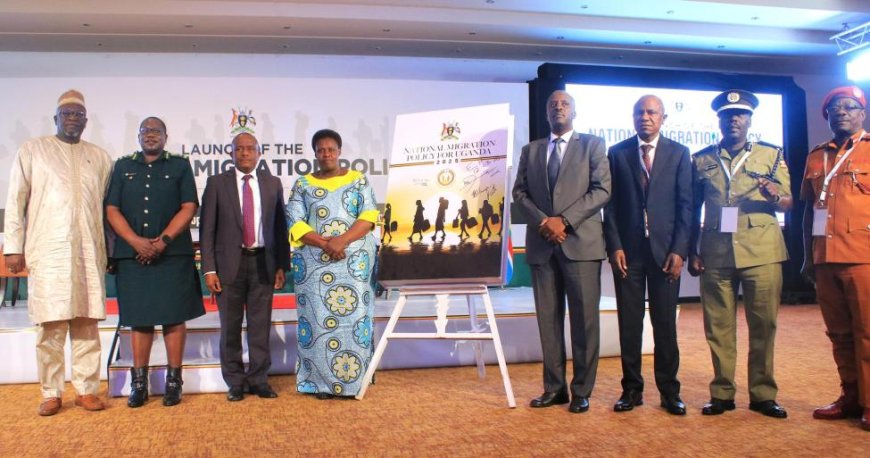
Uganda has taken a significant step toward strengthening migration governance with the launch of its first ever National Migration Policy.
Uganda's immigration policy, governed by the Citizenship and Immigration Control Act (Cap 66), regulates entry, stay, and work via online visas, work permits, and residence certificates managed through the Ministry of Internal Affairs.
It requires foreign nationals to have valid permits for employment and allows for long-term residency or citizenship after specified periods, including provisions for dual citizenship.
The 2025 framework outlines how the country will manage human mobility and harness it for national development.
Jessica Alupo Vice President in her remarks said: “This is not merely the unveiling of another government document. It is the unveiling of a national vision—a declaration of Uganda’s commitment to manage migration in a manner that is orderly, secure, humane and beneficial to our people.”
For years, Uganda lacked a unified national framework to guide human mobility and coordinate the institutions responsible for managing it.
Alupo noted that the new approach now fills this gap by improving inter-agency coordination, strengthening migration data systems and supporting programmes that facilitate migrant reintegration and diaspora investment. It also aligns with Vision 2040, the Fourth National Development Plan and global commitments such as the Global Compact for Migration.
State Minister for Internal Affairs David Muhoozi said the strategy reflects a strategic government decision to leverage migration for development.
“Our goal is clear: to ensure migration contributes positively to growth, protects the rights and welfare of migrants, enhances national security, and positions Uganda as a country with credible and humane migration governance.”
The new approach addresses key drivers of migration, including movements linked to employment, education and conflict, as well as the growing links between climate change and mobility. It establishes a framework for labour migration governance, promotes fair and safe treatment of migrants, and strengthens border management and migration data systems to support national planning and socioeconomic development.
IOM Uganda Chief of Mission Sanusi Tejan Savage described the policy as the culmination of decade-long collaboration with the Government, a partnership he pledged would continue.
“This policy strengthens institutions, data, and coordination to manage mobility strategically – protecting migrants while enabling development,” he said. “IOM is proud to support this process and remains committed to working with the Government and partners to turn the policy into results for communities.”
Savage reaffirmed IOM’s commitment to working with the Government to ensure migration remains a positive force for development, protection and regional cooperation, through programmes on labour mobility, migrant protection, migration health, resettlement, and immigration and border information.
In Uganda, migration is driven by both opportunity and necessity. Many people move voluntarily in search of employment, education and investment opportunities, while others are displaced by conflict, political instability, trafficking and natural disasters.
Labour migration has increased in recent years, particularly to the Gulf region, where nearly 294,000 Ugandan migrant workers were registered in 2024. Remittances have also grown significantly, with more than five trillion Ugandan shillings sent home in the last financial year, supporting households and contributing to economic growth.