HOW JICA AND UN WOMEN ARE DEFYING DROUGHT AND MULTIPLYING RICE YIELDS IN WEST NILE
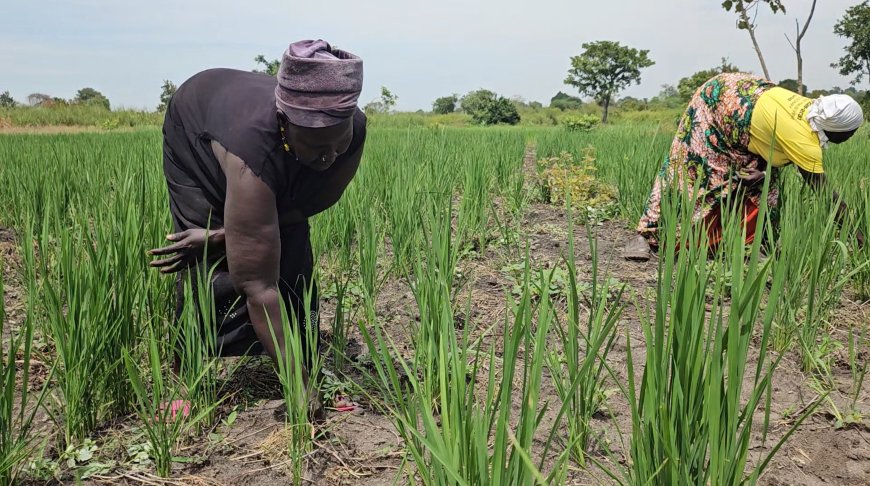
A Japan-funded agricultural initiative led by UN Women Uganda, Peace Winds Japan, and the National Agricultural Research Organisation (NARO) is driving a massive surge in rice production among refugees and host communities in Yumbe and Madi Okollo districts. The project aims to strengthen women's economic empowerment, food security, and peaceful coexistence while addressing climate-related conflict risks in West Nile's displacement-affected areas. Aligned with Uganda’s Women, Peace and Security National Action Plan, the project builds on lessons from a previous JICA rice initiative but places a specific emphasis on women’s leadership. Natasha Butorac, Women, Peace and Security Specialist at UN Women, noted that the vast majority of participating farmers are now women, successfully challenging traditional gender stereotypes. Despite a severe, prolonged dry spell in West Nile, demonstration gardens planted with the NERICA 4 rice variety have shown encouraging results. Dr. Emmanuel Odama, a senior research officer at NARO, and Amaku Shaban, chairperson of the Dongoloto Farmers Group, both noted that local, ordinary rice varieties would have completely withered under the current harsh weather conditions. NERICA 4 was explicitly introduced for its disease and drought tolerance. To train the farmers, NARO utilizes the Musomesa field school model, which pairs collective learning with immediate, practical application: Mother Gardens: Group-level demonstration plots where farmers learn modern techniques like line-sowing. Baby Gardens: Individual, half-acre family plots where members concurrently replicate the exact practices learned. This method has also fostered social cohesion. Host community members are actively sharing portions of their land with refugees, granting displaced families agricultural access beyond their traditional allotments and strengthening regional peace. Tangible Livelihood Transformations The shift from traditional "broadcasting" (scattering seed) to row-planting and proper post-harvest handling has dramatically reduced labor while multiplying yields. Taban Rashid, a project farmer and trainer from Kululu sub-county in Yumbe district, shared his dramatic turnaround: • Old Method: Used 50kg of seed per acre, required 15 days of weeding, and yielded 8 bags per acre—earning about sh800,000. • New Method: Yields jumped to 25 bags per acre, driving earnings up to sh2.5 million. "I used to blame the milling machine for breaking my rice. But with the knowledge I got, I came to learn that the quality is made in the garden, protected in the store, and the machinery only reveals the work you did from planting to storage." Taban Rashid, Project Farmer & Trainer Despite a severe prolonged dry spell in West Nile, the NERICA 4 crop has survived where traditional crops failed. By addressing critical needs through improved seed, hands-on training, and post-harvest management, the intervention is successfully using women’s economic empowerment to build long-term climate resilience and lasting community peace in settlements like Bidi Bidi and beyond. According to Dr. Emmanuel Odama, a senior research officer at NARO, local varieties would have withered completely under the current weather conditions. By putting women at the center of agricultural production, the intervention successfully challenges gender stereotypes while providing West Nile families with sustainable income, food security, and long-term climate resilience.
 Felix Oketcho
0
4