CSBAG URGES GOVERNMENT TO INCREASE FUNDS.FOR HEALTH
According to Mukunda, this situation poses a serious risk because donor support is expected to decline significantly beginning in the 2025/26 financial year.
 Felix Oketcho
By Felix Oketcho
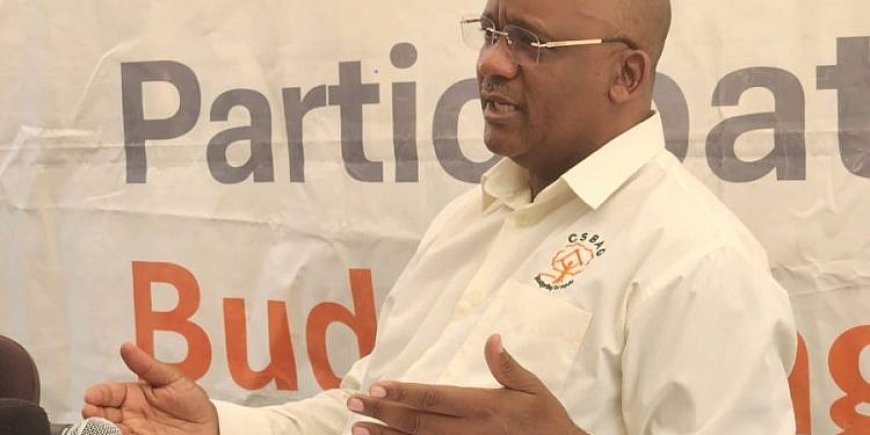
Civil Society Budget Advocacy Group (CSBAG) has urged the government to increase and ring-fence funding for essential medicines and health supplies following alarming findings in the latest report by the Office of the Auditor General Uganda on the state of Uganda’s health sector.
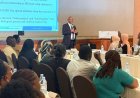
Addressing the media in Kampala Executive Director, Julius Mukunda, said the Auditor General’s report reveals serious funding gaps and operational weaknesses that are affecting service delivery in public health facilities across the country.
Mukunda noted that the findings show the health financing system is under significant pressure, with critical institutions receiving far less funding than required to deliver services effectively.
“The Auditor General’s findings reveal a health financing system under sustained structural pressure. In the 2024/25 financial year, the National Medical Stores required Shs1.574 trillion to fulfil its mandate but received only Shs1.393 trillion, leaving an 11 percent funding gap,” Mukunda said.
He explained that these funding shortfalls are affecting hospitals and health centres, leading to medicine shortages and delays in the delivery of medical supplies.
“At Mulago National Referral Hospital, only Shs18.25 billion was provided against a requirement of Shs72.396 billion, representing a 75 percent funding gap for specialised medicines and supplies. Such disparities constrain access to life-saving treatment and increase out-of-pocket expenditure for households,” he added.
Mukunda urged the government to increase domestic funding for medicines in order to reduce reliance on donors and prevent frequent stock-outs in health facilities.
“Government should progressively increase and ring-fence domestic allocations for essential medicines and health supplies to close persistent funding gaps, including the severe shortfall at referral hospitals. Releases must be timely and predictable to prevent stock-outs,” he said.
The Auditor General’s report also revealed that Uganda’s medicine supply system heavily depends on development partners, who financed 64.3 percent of essential medicines in the 2024/25 financial year compared to only 35.7 percent from domestic resources.
According to Mukunda, this situation poses a serious risk because donor support is expected to decline significantly beginning in the 2025/26 financial year.
“Beginning in FY 2025/26, approximately $312.8 million in donor support is expected to be withdrawn. Without a credible domestic transition strategy, this withdrawal risks widening medicine stock-outs and weakening Uganda’s capacity to manage disease outbreaks and health emergencies,” he warned.
The report further highlights operational challenges within the health sector. Mukunda said more than 100 health facilities experienced delays in receiving medicines.
“The audit reveals that 102 health facilities experienced delayed deliveries, with delays ranging from one to 148 days. Eight facilities received medicines with shelf lives of less than four months, contrary to the Essential Medicines and Health Supplies (EMHS) Manual standards,” he said.
He added that by June 30, 2025, the National Medical Stores was holding medicines worth Shs8.04 billion that had expired or were no longer viable, pointing to weaknesses in planning and supply chain management.
Mukunda also raised concerns about critical shortages in blood supplies across health facilities, saying this poses a serious risk to emergency care.
“Out of 49,081 units of blood ordered by 67 health facilities, only 27,298 units were delivered, meaning just 56 percent of demand was met. Thirteen facilities lacked functional cold-chain storage, while 34 facilities recorded blood stock-outs lasting between three and 365 days,” he said.
According to Mukunda, such shortages undermine maternal health services, trauma care and emergency response across the country.
He therefore called on the government to invest more in blood collection, storage infrastructure and distribution systems to strengthen emergency health services.
CSBAG also assessed findings across 11 thematic areas in the Auditor General’s report, including land administration, industrial parks, state-owned enterprises, wetlands management, rationalisation of public expenditure, domestic arrears, domestic revenue performance, tax policy compliance and the health sector.
Mukunda urged government institutions to take the report seriously and act on the recommendations to improve public service delivery.
“The findings of the Auditor General demand more than acknowledgment; they require decisive corrective action. Sustained fiscal credibility and improved service delivery will only be achieved if reforms are implemented with discipline, consistency and accountability,” he said.
CSBAG called on authorities to treat the findings as a mirror to reflect on their performance and identify areas that require improvement.
“We therefore urge Parliament, the Executive and all accounting officers to treat these findings as an opportunity to reset priorities, enforce responsibility and ensure that public resources deliver tangible results for Ugandans,” Mukunda said.
The Civil Society Budget Advocacy Group (CSBAG) is a Ugandan coalition formed in 2004 to influence government decisions on resource mobilization and utilization. It brings together civil society organizations to promote transparency, accountability, and a people-centered budget that reflects the needs of citizens.
csbag
csbag
+2
Key aspects of CSBAG include:
Mission & Vision: Empowering citizens for equitable and sustainable development through budget advocacy, aiming for a budget that dignifies humanity.
Focus Areas: Influences sectors like health, education, agriculture, energy, and, roads.
Activities: Conducts research, policy analysis, and, monitoring of public spending at both national and local levels.
Structure: Operates via 9 Regional Budget Coalitions to ensure grassroots participation.
Leadership: Coordinated by Julius Mukunda.
csbag
csbag
+4
CSBAG has played a significant role in fostering, and gender-sensitive budgeting, and it often works to increase accountability by reviewing reports from the Office of the Auditor General.
csbag
csbag
+1
CSBAG - Wikipedia
The Civil Society Budget Advocacy Group (CSBAG) is a Ugandan nonprofit organization that was founded in 2004 to bring together Civil Society Organizations (CSOs...
Wikipedia
About CSBAG
The Civil Society Budget Advocacy Group (CSBAG) is a coalition of CSOs that was formed in 2004. The coalition's goals are to: * Influence government decisions o...
csbag
csbag.org
10 Feb 2026 — Latest Tweets. CSBAG (csbag.org) Follow. The Civil Society Budget Advocacy Group (CSBAG) is a coalition that brings together CSOs and individuals in Uganda to e...
csbag
Our Track Record (stories of change) - csbag.org
20 Sept 2024 — Since 2004, the Civil Society Budget Advocacy Group (CSBAG) has continued to bring together Civil Society Organizations (CSOs) at national and district Levels t...
csbag
Economic Graduate Internship : csbag.org
Economic Graduate Trainee Program. Civil Society Budget Advocacy Group (CSBAG) About CSBAG. The Civil Society Budget Advocacy Group (CSBAG) is a coalition estab...
csbag
Field officer - csbag.org
The Civil Society Budget Advocacy Group (CSBAG) is a coalition formed in 2004 to bring together CSOs at national and district levels to influence Government decisions on pro poor budget issues .
The CSO Budget Advocacy Group (CSBAG) works to increase representation and consolidate the subnational CSO voice and action across the country.