
SPIRO SECURES $215MILLION FOR EXPANSION DRIVE
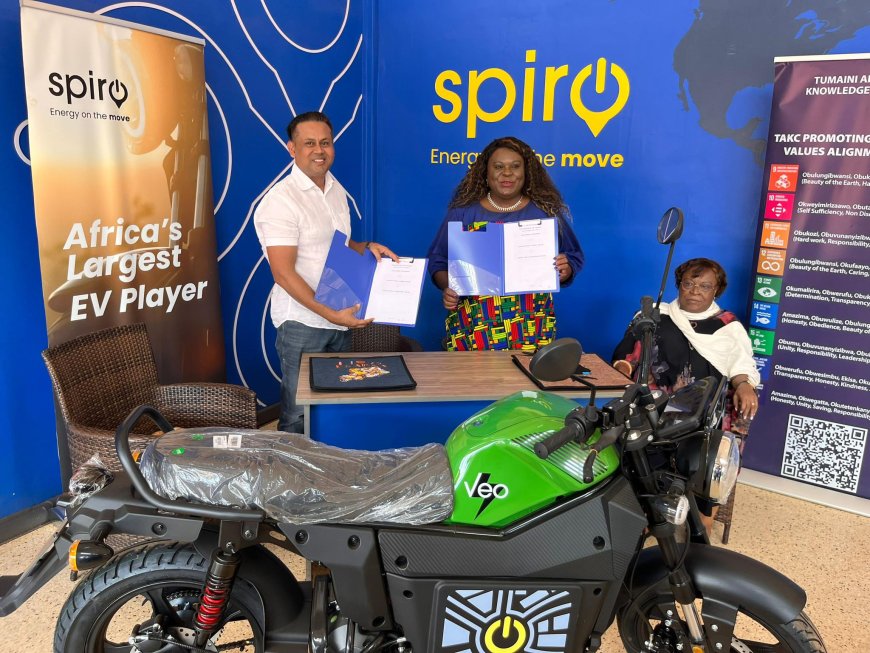
African Electric Mobility platform Spiro has secured $ 215 million in an equity funding to expand its continent-wide battery-swapping network and manufacturing footprint operations across the continent. The investment round was backed by major institutional investors, including Equitane and Impact Fund Denmark. The scale-up currently operates in seven of Africa’s fastest-growing urban markets, including Uganda, Kenya, Rwanda, Togo, Benin, Nigeria, and Cameroon. Company officials say the new capital will accelerate the expansion of its battery-swapping network and industrial footprint. Spiro Africa’s largest electric mobility company, operates the continent’s most extensive and fastest growing network of battery-swapping for electric two-wheel vehicles with over 95,000 electric motorcycles, over 2,500 battery swapping stations and more than 30 million battery swaps to date through its expanding regional production network and operational assembling facilities in Uganda, Kenya, Nigeria and Rwanda, Spiro has already deployed 100,000 electric motorcycles across Africa. Its infrastructure includes more than 2,500 battery swapping stations which have powered over 30 million battery swaps to date. According to company data, the platform has achieved over 1 billion kilometers of low-carbon travel. The shift to electric mobility offers significant economic benefits for riders. Operating a Spiro electric vehicle can reduce daily mobility costs by up to 40 percent, representing savings of approximately 2 dollars per day compared to fossil-fuel motorcycles. Gagan Gupta, founder of Spiro and Chairman of Equitane, said the company has become a major driver of local industrialization and manufacturing. The platform has created 6,000 direct and indirect jobs across its active markets. Beyond transport, Spiro is expanding into a distributed clean-energy utility network. Its innovations include solar-powered swap stations and secondary-life battery applications designed for stationary renewable energy storage. Recent third-party verified lifecycle assessments in Kenya indicate that Spiro’s electric bikes deliver a 72 percent reduction in climate impact compared to fossil-fuel motorcycles. This is equivalent to avoiding approximately 19 tons of carbon dioxide emissions over the lifespan of a vehicle. Lars Bo Bertram, CEO of Impact Fund Denmark, said the investment brings Danish pension capital into one of Africa’s most promising growth markets. He noted the potential for significant commercial growth alongside measurable climate impact. Spiro plans to use the funding to enter new high-growth markets, including Ethiopia and the Democratic Republic of Congo. The company maintains manufacturing plants in Uganda, Kenya, and Rwanda, as well as a battery recycling facility in Nigeria. Spiro operations in Uganda Spiro Uganda leads the transition to electric mobility in Kampala by providing electric 'boda bodas' (motorcycle taxis) and a vast network of automated battery swapping and charging stations across the city. The company focuses on reducing carbon emissions and helping riders save money on expensive imported fuel Uganda’s government actively supports Spiro's e-mobility expansion through land grants, infrastructure integration, and policy shifts. Backed by the National E-Mobility Strategy, the state provides direct facilities for assembly, encourages adoption in public operations, and integrates Spiro into national development programs The Ugandan government allocated 20 hectares of land to Spiro Uganda in Bukerere (Wakiso District) to establish a major electric vehicle assembly plant. Facilitated by the National Housing and Construction Corporation (NHCC), this initiative aims to accelerate the country's transition to sustainable, eco-friendly electric transport. This land allocation aligns with President Yoweri Museveni's directive to boost local industrialization and provide thousands of jobs to Ugandan artisans.
 Felix Oketcho
0
6