SHS22.7BN IMPLICATED AS MUSEVENI’S ANTI-CORRUPTION DRIVE INTENSIFIES
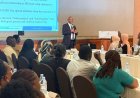
President Yoweri Kaguta Museveni’s directive to eradicate corruption is gathering significant momentum, with Shs22.7 billion in public funds currently under investigation. The ongoing nationwide “Expose the Corrupt” campaign is a multi-agency effort led by the State House Anti-Corruption Unit (SHACU) and the Minister of State for Local Government, Hon. Balaam Barugahara. So far, the crackdown has resulted in the arrest of 267 suspects, the interdiction of 253 officials, and the arraignment of nearly 40 individuals before the courts. Investigating, Not Just Accusing Speaking at his Kampala office, SHACU head Brig. Gen. Henry Isoke clarified that the Shs22.7 billion represents funds tied to active complaints and does not automatically imply the money has been lost or stolen. “The actual extent of any financial loss, recoverable funds, and criminal liability will be established through ongoing investigations, audits, and forensic verifications,” Brig. Gen. Isoke explained. The campaign unites SHACU, the Criminal Investigations Directorate (CID), and the Directorate of Public Prosecutions (DPP) to investigate abuse of office, ghost procurement, and poor service delivery across local governments. Priority focus areas include local infrastructure, land administration, and the Parish Development Model (PDM). Addressing public concerns over why arrests far outnumber court arraignments, Brig. Gen. Isoke emphasized that investigations take time. “An arrest does not automatically mean immediate prosecution," he said. "Investigators and prosecutors must secure airtight evidence before proceeding to court." He noted that immediate arrests are often necessary to prevent suspects from destroying vital evidence, tampering with documentation, or interfering with witnesses. Furthermore, the threat of immediate arrest has served as an effective deterrent, prompting officials in other districts to complete long-ignored public works out of fear of prosecution. Growing Citizen Vigilance The campaign has successfully generated 124 complex case files from public complaints. However, SHACU notes that not every grievance raised during public barazas (community meetings) translates into a criminal case; each is evaluated independently. Common systemic risks exposed so far include:education fraud,illegal Illegal fees and inflated enrollment numbers in universal secondary schools (e.g., recent enforcement actions in Busia and Mbale)and Irregular recruitments by District Service Commissions and the diversion of PDM and Emyooga wealth-creation funds. President Museveni recently told the NRM Parliamentary Caucus that corruption remains a major bottleneck to Uganda's economic transformation. He reiterated that leaders must bypass sugar-coated official reports and engage directly with local communities to monitor project implementation. Institutional Collaboration Responding to questions regarding SHACU’s independence given its close partnership with Minister Barugahara, Brig. Gen. Isoke maintained that fighting corruption requires a unified front rather than institutional isolation. “While independence is important, it is not the primary concern because defeating corruption demands a joint effort from all stakeholders,” Isoke stated, adding that the partnership has successfully bridged the gap between anti-corruption watchdogs and local government structures. Having already traversed Busoga, Bukedi, Bugisu, Sebei, Ankole, Buganda, and Tooro, the "Expose the Corrupt" campaign is currently active in the Bunyoro sub-region, targeting Kiryandongo, Masindi, Buliisa, and Hoima. Ultimately, SHACU aims to transition these public rollouts into permanent internal controls, resource recovery, and institutional transparency to support Uganda's long-term economic growth targets.
 Felix Oketcho
0
6